Summary
Have you ever tried on a beautiful sweater only to feel like something looked... off? Maybe your skin looked pale. Your dark circles seemed more noticeable. You looked tired, even after a good night's sleep. The problem may not be you—it may be the color.
Learning why certain colors work better than others is one of the easiest ways to improve your wardrobe without buying more clothes.
Why Does This Happen?
When people say a color "doesn't suit me," they're usually noticing how that color interacts with their natural features.
Every person's skin reflects light differently. Some colors make your complexion look brighter and healthier, while others create shadows that make your face appear dull.
It's the same reason good lighting makes a photo look better. The color closest to your face works like lighting.
Three Signs a Color Isn't Working
You don't need to know color theory to notice when something feels wrong. Here are three common signs.
1. Your skin looks gray or dull
Instead of looking healthy, your complexion loses its natural glow.
2. Dark circles become more obvious
The wrong color can make shadows around your eyes appear stronger.
3. Small imperfections stand out
Redness, blemishes, or uneven skin tone may become more noticeable. If you've ever thought, "I look exhausted today," try changing your shirt before blaming your sleep.
It's Not About Expensive Clothes
Many people think buying better clothes will solve the problem. In reality, even a luxury sweater can look unflattering if the color doesn't complement your complexion.
Meanwhile, a simple T-shirt in the right color can make you look healthier and more polished. Choosing the right color often creates a bigger difference than choosing a more expensive brand.
Warm and Cool Colors
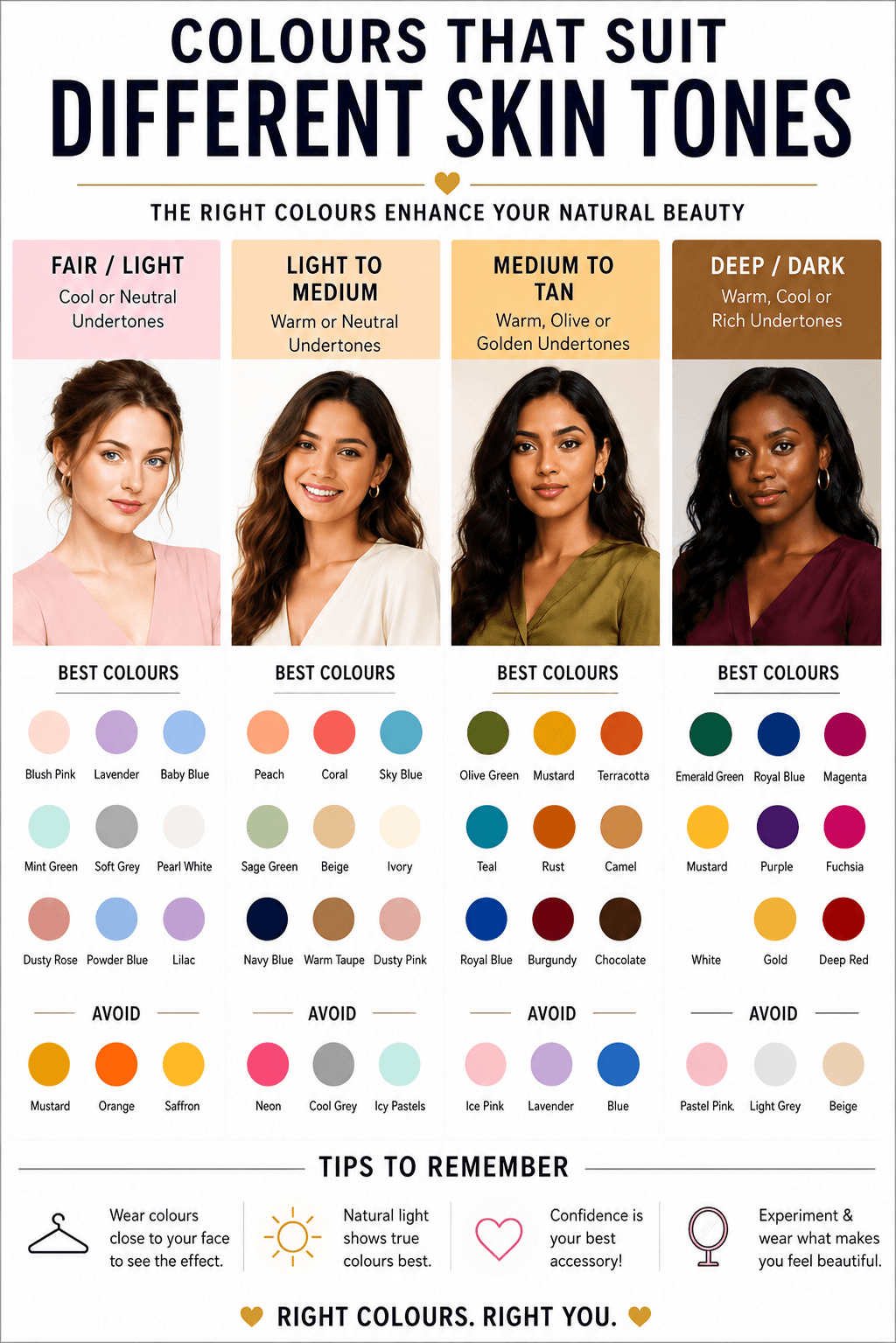
You don't need to memorize complicated seasonal color systems. Start with one simple idea. Some colors have warm undertones.
Examples include:
- Cream
- Camel
- Olive
- Mustard
- Rust
Other colors have cool undertones.
Examples include:
- Pure white
- Navy
- Emerald
- Royal blue
- Cool gray
People often notice they naturally look better in one group than the other. The easiest way to find out is simply to try both.
Try This Five-Minute Test
Stand near a window during the day. Wear little or no makeup if possible. Hold two shirts—one warm and one cool—under your chin. Don't look at the clothes. Look only at your face.
Ask yourself:
- Which one makes my skin look brighter?
- Which one makes my eyes stand out?
- Which one makes me look more awake?
The answer is often surprisingly obvious.
You Don't Need to Throw Everything Away
Finding your best colors doesn't mean replacing your wardrobe. Instead, use your most flattering colors near your face.
Think about:
- T-shirts
- Shirts
- Sweaters
- Jackets
- Scarves
For pants, skirts, or shoes, color matters much less because they're farther from your face. This small adjustment can make a noticeable difference without changing your personal style.
The Goal Isn't Perfection
There isn't one "correct" color for everyone. Fashion is still about expressing yourself. Understanding color simply gives you another tool to make getting dressed easier. When your clothes naturally work with your features, you spend less time wondering why an outfit feels wrong—and more time feeling confident in it.
Key Takeaways
- Beautiful colors aren't automatically flattering.
- The color closest to your face has the biggest impact.
- The right color can make you look brighter and more energetic.
- The wrong color can emphasize shadows and make you appear tired.
- Start by testing warm and cool colors in natural daylight before buying new