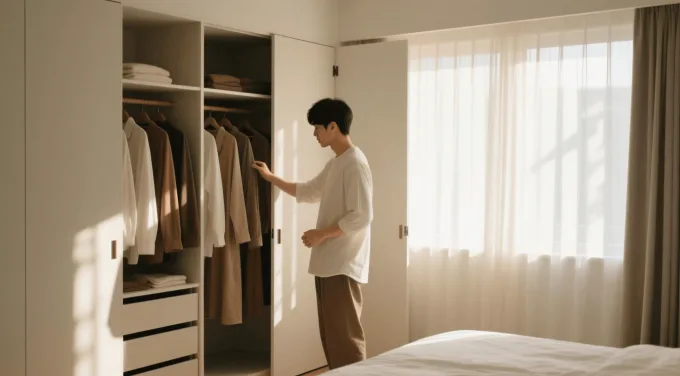
Open your wardrobe.
Now ask yourself a simple question:
How many of those clothes do you actually wear?
For most people, the answer is surprisingly small. Studies and surveys consistently suggest that we regularly wear only a fraction of what we own, while the rest quietly occupies valuable space, attention, and money.
Yet every morning we stand in front of a wardrobe full of options and somehow arrive at the same conclusion:
"I have nothing to wear."
The problem isn't a lack of clothing.
It's a lack of a system.
The Hidden Cost of Too Many Choices
Psychologists have long studied the effects of excessive choice on decision-making. More options don't always make us happier. In many cases, they create friction, anxiety, and fatigue.
Your wardrobe is one of the first decision environments you encounter every single day.
Before the first email. Before the first meeting. Before the first coffee.
You're already making dozens of micro-decisions:
- Which shirt works with these pants?
- Is this too formal?
- Does this fit the weather?
- Did I wear this earlier this week?
- Does this still represent who I am today?
Multiply that by 365 days a year and the cognitive cost becomes obvious.
Enter the Capsule Wardrobe
A capsule wardrobe is often misunderstood as minimalism for the sake of minimalism.
It isn't.
The goal isn't to own fewer clothes.
The goal is to own better combinations.
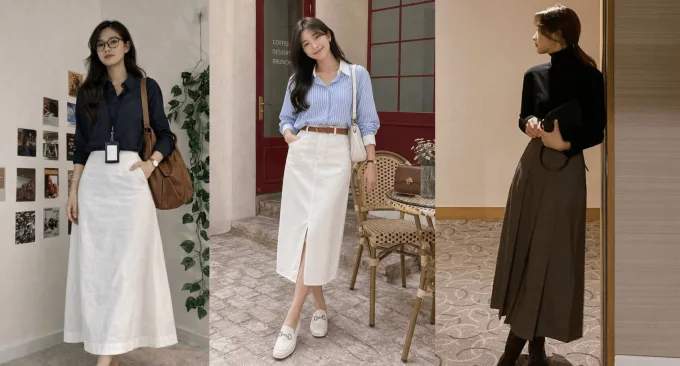
A well-designed capsule wardrobe typically consists of versatile pieces that work together effortlessly:
- Neutral foundational colors.
- Timeless silhouettes.
- Clothing that fits your lifestyle rather than your aspirations.
- Pieces that can be mixed and matched across multiple occasions.
The result isn't restriction.
It's freedom.
Instead of asking, "What can I wear today?"
You begin asking, "Which version of myself do I want to show today?"
Think in Systems, Not in Pieces
Most people buy clothing individually.
A jacket catches their eye. A trendy shirt appears on social media. A pair of sneakers goes on sale.
Each purchase makes sense on its own.
Together, they become chaos.
The most effective wardrobes are built differently.
Every new item should answer a simple question:
What existing pieces can this work with?
If a new shirt only works with one pair of pants, it adds complexity.
If it works with five outfits, it adds value.
The usefulness of clothing is not measured by how often you admire it.
It's measured by how often you wear it.
Quality Outperforms Quantity
Fast fashion trained consumers to optimize for price and novelty.
Great wardrobes optimize for frequency of use.
A premium white Oxford shirt worn 100 times is often cheaper per wear than an inexpensive trendy piece worn twice.
The metric isn't cost per purchase.
It's cost per wear.
This simple shift changes purchasing behavior dramatically.
You stop buying for the excitement of acquisition and start buying for the longevity of utility.
The Same Principle Applies Beyond Fashion
The idea behind capsule wardrobes extends far beyond clothing.
The best products aren't the ones with the most features.
The best interfaces aren't the ones with the most options.
The best lives aren't necessarily the busiest ones.
In design, product development, and even personal productivity, simplicity is rarely about removing value.
It's about removing friction.
Because the ultimate luxury isn't abundance.
It's clarity.
And perhaps the perfect wardrobe isn't the one that contains the most clothes.
It's the one that asks the fewest questions every morning.