Summary
A $15 T-shirt sounds like a great deal. But what if it only lasts five wears? Meanwhile, a $60 T-shirt worn a hundred times actually costs less every time you put it on. The smartest shoppers don't always buy the cheapest clothes. They buy the ones they'll actually wear.
Cheap Doesn't Always Mean Affordable
We've all done it.
A shirt is on sale. It looks good. The price is hard to resist.
So we buy it.
Months later, it sits in the back of the closet with the tags still attached—or it's already stretched, faded, or out of shape. The money wasn't wasted because the shirt was inexpensive. It was wasted because it wasn't used.
Meet "Cost Per Wear"
Fashion has a simple idea that can completely change the way you shop.
It's called Cost Per Wear (CPW). The formula is simple:
Cost Per Wear = Purchase Price ÷ Number of Times You Wear It
For example:
| Item | Price | Times Worn | Cost Per Wear |
|---|---|---|---|
| T-shirt A | $15 | 5 | $3.00 |
| T-shirt B | $60 | 100 | $0.60 |
The more you wear something, the better value it becomes.
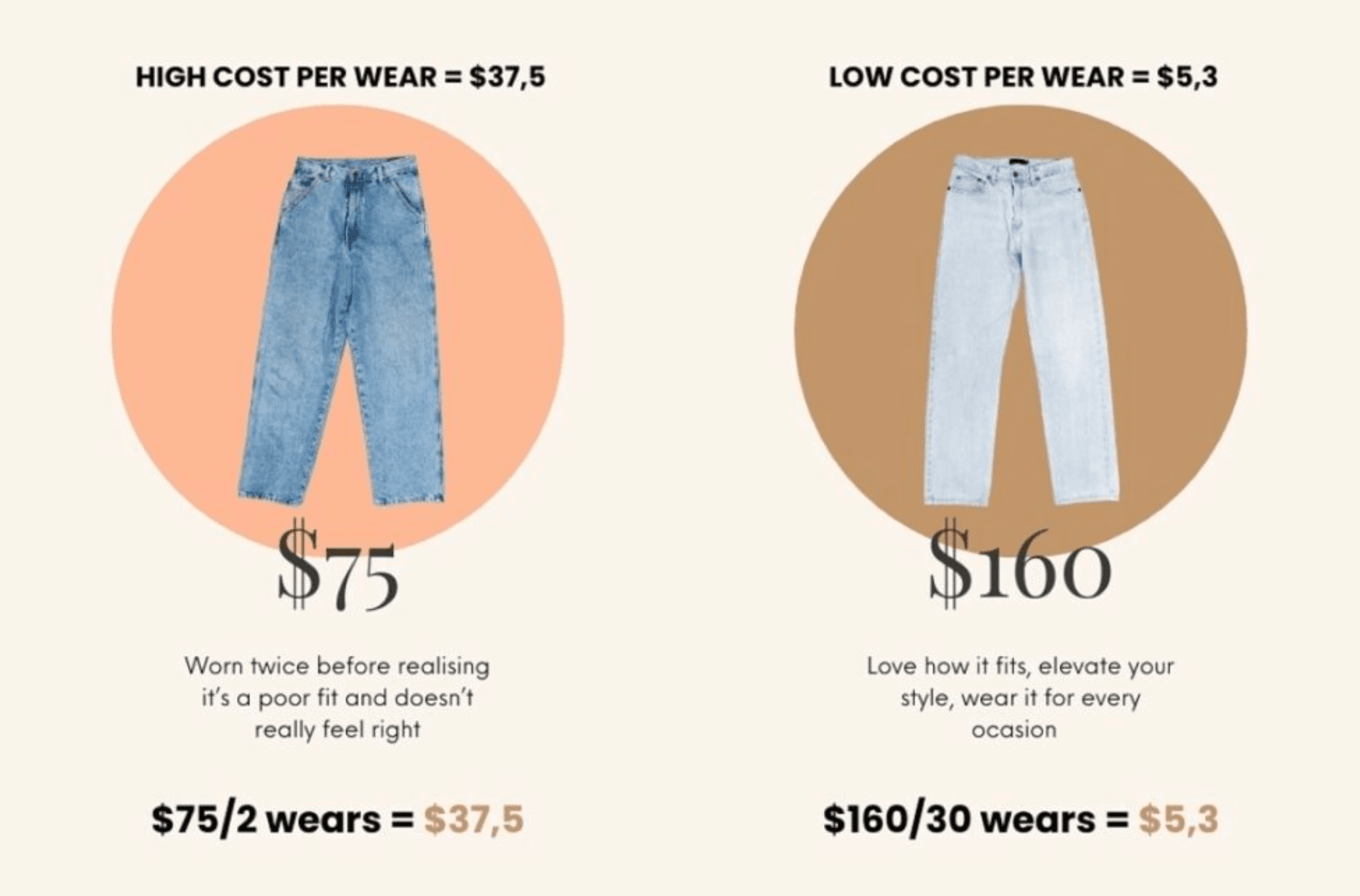
Why We Keep Buying Clothes We Don't Wear
Most purchases aren't driven by need. They're driven by emotion. Maybe the discount feels too good to pass up. Maybe it's trending. Maybe you imagine yourself wearing it more often than you actually will. This is called the fantasy self—buying clothes for the person you hope to be instead of the life you live today.
If you work from home every day, do you really need another formal blazer? If you mostly wear sneakers, will those dress shoes ever leave the box?
A Better Question to Ask
Instead of asking:
"Is this a good price?"
Ask:
"Can I wear this at least 30 times?"
If the answer is yes, it's probably a better purchase than something cheaper you'll wear only once. This one question helps reduce impulse buying and build a wardrobe that actually works.
Quality Doesn't Always Mean Luxury
You don't have to spend hundreds of dollars on every piece.
A quality item is simply one that:
- Keeps its shape after washing.
- Feels comfortable to wear.
- Matches many outfits.
- Lasts through regular use.
Some affordable brands make excellent basics. Some expensive brands don't. Price and quality aren't always the same thing.
Buy Clothes That Earn Their Place
Before checking out, ask yourself:
- Would I wear this next week?
- Does it match at least three outfits I already own?
- Is it comfortable?
- Would I still buy it if it weren't on sale?
If several answers are "no," it may not belong in your wardrobe.
A Smaller Wardrobe Can Save More
Many people think having more clothes means having more choices. In reality, the opposite is often true. A wardrobe filled with pieces you love and wear regularly is easier to manage, easier to style, and often costs less over time. Buying fewer, better-fitting, versatile pieces isn't about minimalism. It's about making every purchase count.
Key Takeaways
- Cheap clothes aren't always the best value.
- Cost Per Wear is a smarter way to measure a purchase.
- Buy clothes for your real life—not your fantasy lifestyle.
- Quality means durability and versatility, not just a higher price.
- Wearing what you own more often is one of the easiest ways to save money.